



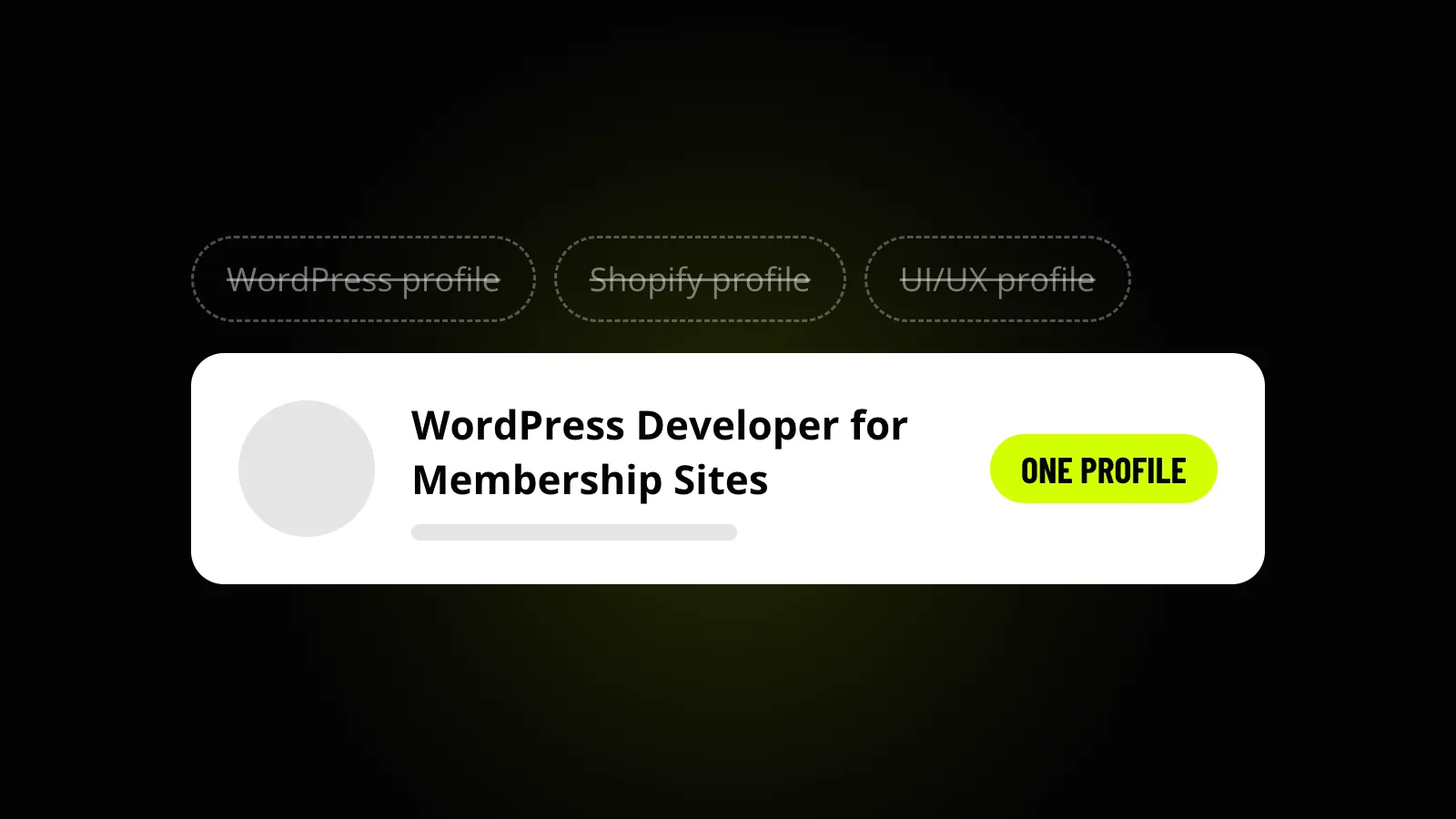
With Upwork specialized profiles removed, most of the advice still ranking on Google is out of date. A lot of it tells you to create a specialized profile. The rest says “lead with one service” and stops there, which is no help if you have two services that both pay the bills.
This post is about that choice: which service gets the title, where the others go, and what to expect from your invites afterwards.
What Upwork removed
Upwork’s help article “Update to Specialized Profiles: What to know” is short. Here is what it says, and nothing more.
| Kept | Gone |
|---|---|
| Your main profile, with all its content visible to clients | The specialized profiles themselves, since May 28, 2026 |
| Work history, earnings and portfolio | The title, overview and skills you wrote for each one, unless you copied them across yourself |
| Your visibility in search, according to Upwork | Any way to get that text back |
Upwork also says the profile now “acts dynamically”, so the most relevant work and skills are highlighted first for each client. We’ll come back to that sentence, because it promises less than it sounds like.
What it cost you
Upwork says your visibility in search stays the same, and we have no evidence that anyone’s main profile was pushed down by the change.
The loss is somewhere else. Invites come from clients searching for talent and from the suggested list Upwork shows them after they post a job. Both match your title and skill tags against what the client typed or posted. The post on why you’re not getting invites goes through the three sources in full.
A specialized profile had its own title and its own skills, so it was a second thing a client’s search could match. If your main profile said “Shopify Developer” and a specialized one said “Klaviyo Email Marketing Specialist”, you had a title for each kind of client. Now you have one.
Your main profile didn’t get worse, it lost the help it used to get.
That is how invites for a second service can thin out while everything on the main profile looks the same. If your numbers fell around the end of May, the post on profile views dropping helps you rule out other causes first.
Which specialty gets the title
The usual advice is to lead with your highest-earning service. That works when one service is clearly ahead. When two are close, you need a way to decide that isn’t a guess about which you’d enjoy more.
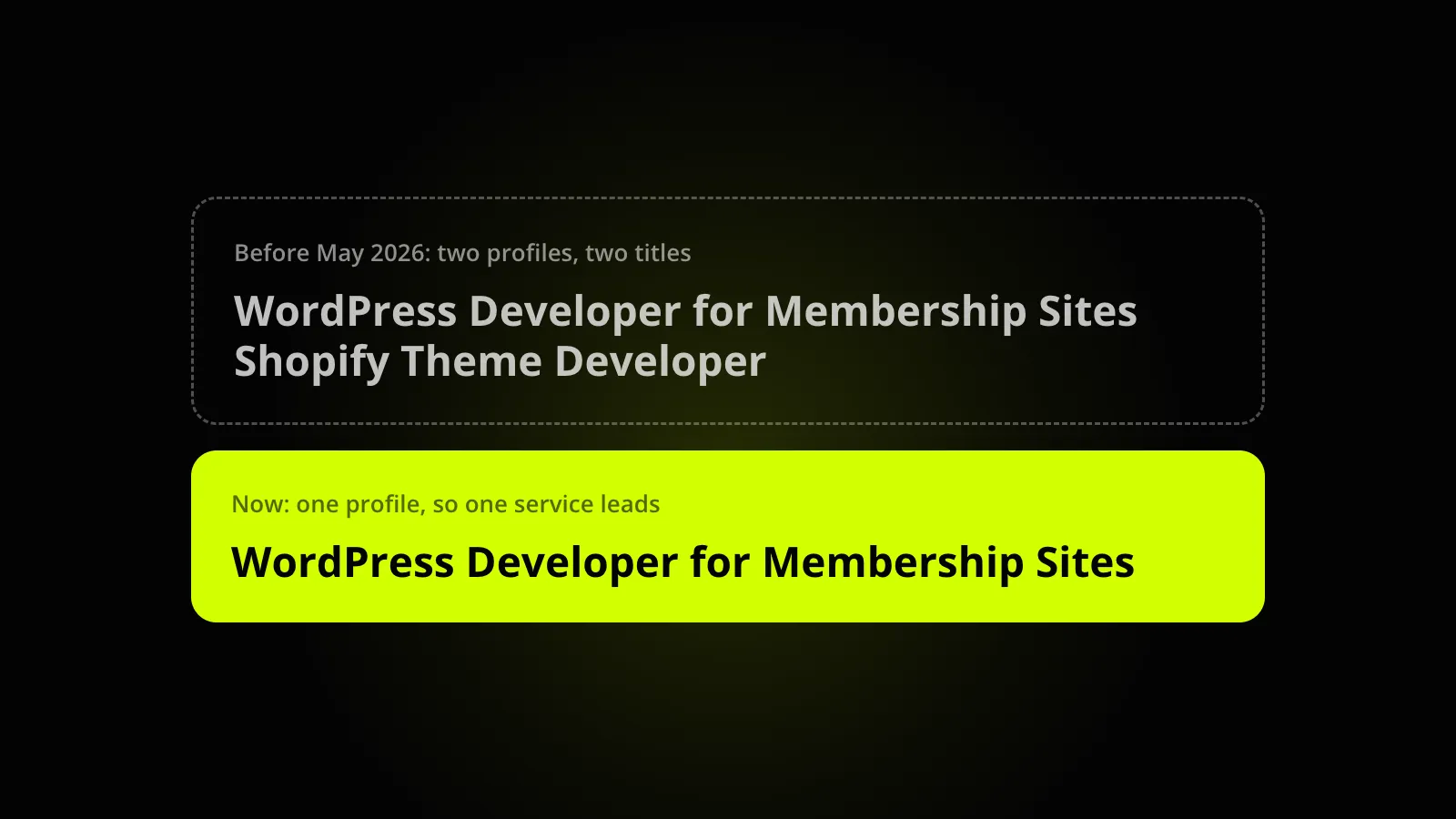 Two titles used to mean two chances to match a search. Now one service has to lead.
Do these in order. It takes about an hour.
Count your invites by service
Go through the invites you received in the last six months and mark each one with the service the client wanted. Ignore the ones that were a poor fit for anything you do.
The count tells you which service clients already come to you for, which isn’t always the one you’d have named.
Count your paid work by service
Do the same with your contracts from the last 12 months. Write down how many contracts each service brought and what they paid.
If invites and earnings point at the same service, you’re done. That one gets the title.
Search for both as a client
If they point in different directions, open a client account and search for each service the way a client would phrase it. Look at who shows up on the first two pages and how your work history compares with theirs.
One of the two will usually be a search where your reviews and earnings hold up, and the other a search full of people with ten times your history in that one thing. Lead with the one you can compete in.
Break a tie with your work history
If it’s still even, read your last ten reviews. The service most of them describe is the one a client will believe when they open your profile.
A title that says Klaviyo above a work history that is all Shopify theme work raises a question the client won’t bother asking you.
Where the second specialty goes
Don’t put it in the title with a pipe. “Shopify Developer | Klaviyo Email | Web Design | SEO” matches nothing well. This is the difference:
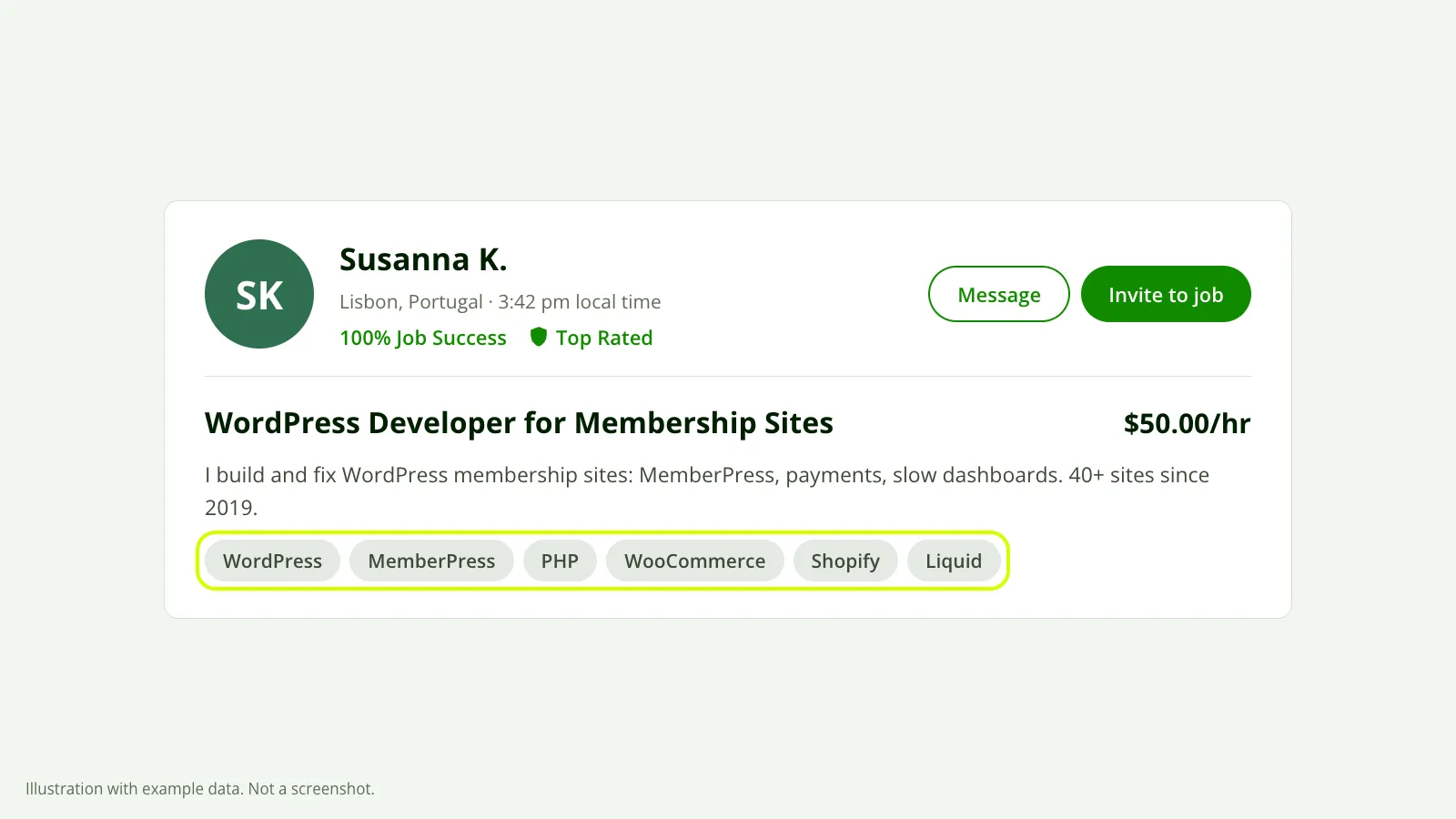 The second service stays on the profile, in the skills and the work history, not in the title. Illustration with example data, not a screenshot.
- Before: “Shopify Developer | Klaviyo Email Marketing | CRO”
- After: “Shopify Developer for Stores That Need Speed and Conversions”
The second service still has three places to live, and they matter in this order.
- Skill tags. Next to the title, this is the field the match is built on, so the second service’s main skills belong here. Take them from real job posts for that service, not from memory. The post on choosing profile skills covers how to split the list between two services.
- Portfolio. Name the items after the service, in the client’s words. “Klaviyo welcome flow for a skincare store” tells a client more than “Email project”.
- Overview. Keep the first two lines for the lead service, because those are what show on your card in search. Further down, give the second service a short block of its own with a plain label, such as “Also: Klaviyo email flows”.
In our experience the second service will get found less than it did when it had a title of its own. Skill tags help, but we haven’t seen them do the work of a title. If the second service matters a lot to you, watch its invites for a month or two and be ready to swap which one leads.
What “dynamic” means
Upwork says the profile will highlight your most relevant work and skills first for every client and every opportunity. That’s the whole description. It hasn’t published how relevance is decided, what gets reordered, or whether it changes who finds you in the first place.
So read it narrowly. It describes what a client sees once they’re looking at your profile. It doesn’t say your profile now matches searches for every service you offer.
You’ll find articles that describe the new system in detail, with slot counts and weights. None of that comes from Upwork. We don’t know how it works either, and we’d rather say so than make something up.
What you can do is give it good material. A portfolio item or a past contract with a clear, specific name is easier for anyone to judge as relevant, a client or a system.
If you lost the text
Upwork says a specialized profile and its content can’t be retrieved after May 28, 2026, by you or by customer support. Writing to support won’t bring it back.
You may still have pieces of it elsewhere:
- Proposals you sent from that profile, where you probably reused the same lines
- A draft in your notes or a document, if you wrote it outside Upwork
- Messages or emails where you sent someone the text to review
If none of those turn anything up, rewrite it from your reviews. The words your clients used about that work are better raw material than what you wrote about yourself two years ago.
What the report checks
Our free report looks at your real profile and tells you how well the title and skills you have now match your niche. You get a score, how you compare with others in your niche, and what’s costing you invites, in order.
You connect through Upwork’s official connection, which is read-only, so we can’t change anything on your profile. The report arrives by email in about 10 minutes.
